

What are heartworms?
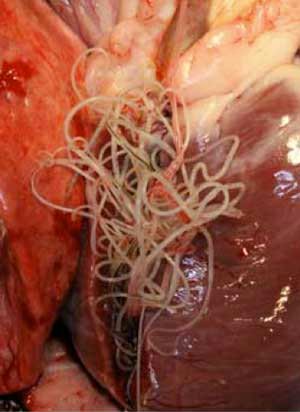
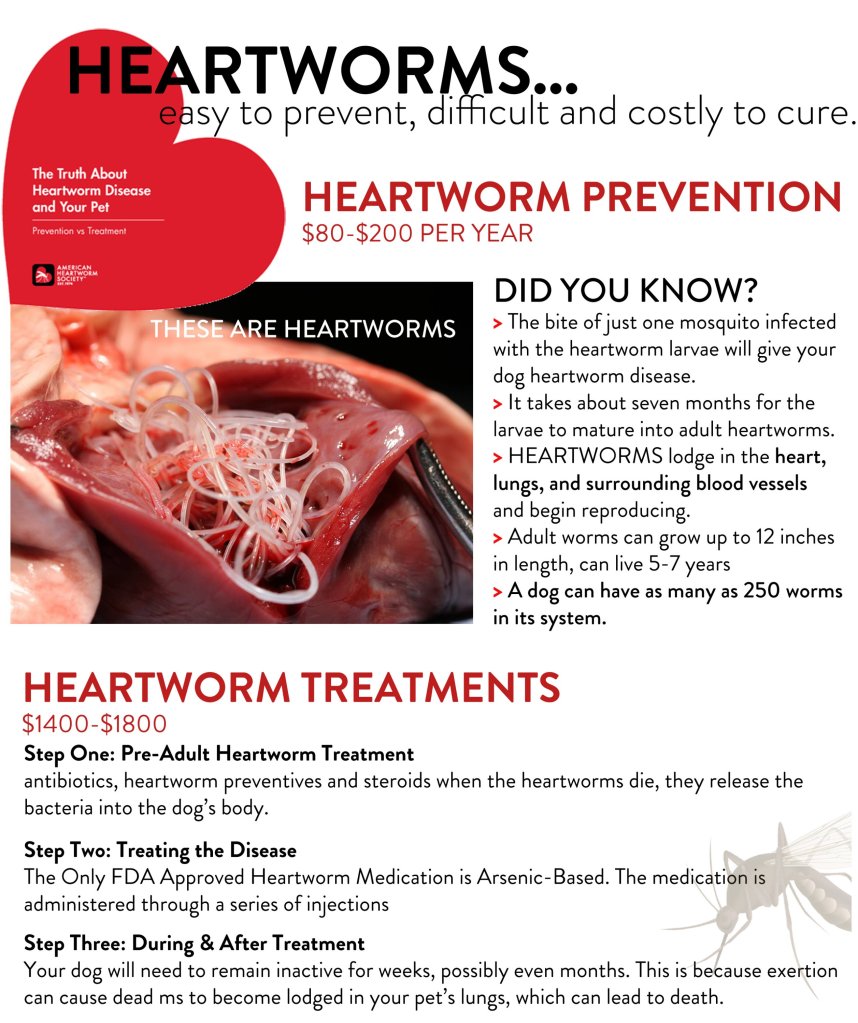
Heartworms are a very destructive parasite that are transmitted by infected mosquitoes. There is no way to tell which mosquitoes are infected and which are not. Heartworms are reported to be present in all 50 states. It takes approximatly seven months for a larva to become a mature adult. They live in the heart, lungs and other major blood vessels where they thrive and reproduce. Adults are known to get up the 12 inches long and can live up to 5 to 7 years. One dog can have as many as 250 worms in its system. Cats are also susceptible to heartworms. However. Heartworms are 100% preventable.
● Transferred by mosquitos
●Approximately 6 to 7 months to mature
●Can live in the animal for 5 to 7 years
● Live in the heart, lungs and other major blood vessels
● One dog can have up to 250 worms at one time
● Cats can also get heartworms
● 100% PREVENTABLE
How does my dog get heartworms?
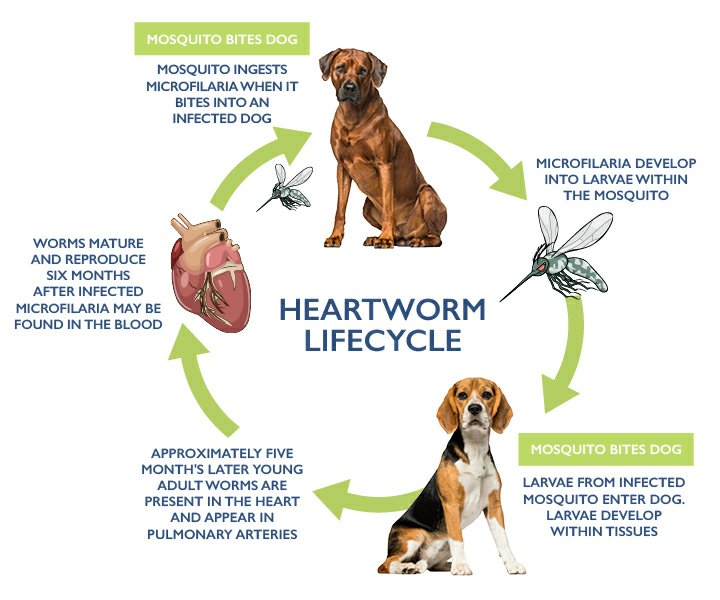
Again, heartworms can only be transmitted by infected mosquitos. Mosquitos ingest heartworm microfilaria when they bite an infected animal. The microfilaria develops into larva and then must go through an incubation period within the mosquito before it can become infectious. Once the mosquito bites your pet, the larva transfers and begins to develop. Typically five to six months later heartworms appear in the heart, lungs and other major blood vessels. Reproduction appears approximately six months after becoming infected. Then the cycle repeats after your pet is bitten by more mosquitos. Further spreading the heartworm disease.
What are heartworm symptoms?
At first there will be no symptoms. As more and more worms crowd the heart the animal will come down with a cough. As time goes on the animal will not be near as active as they were originally. They become easily winded and very lethargic. They will have difficulty breathing, and in worse cases, you can hear abnormal sounds in the chest cavity. Dogs have been known pass out due to lack of blood to the brain, and will ultimately die if not treated.
●coughing
●exercise intolerance
●difficulty breathing
●enlarged liver
●death
Are heartworms contagious?
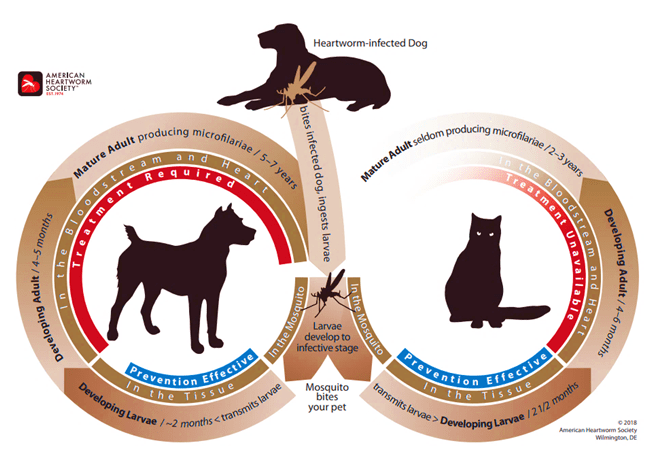
Heartworms can not be passed dog to dog. Heartworms are only passed through bites by infected mosquitoes. There is no way to tell which mosquitoes are contagious and which are not. This is why it is very important to keep your pets on heartworm prevention. (*Review the photo above.)
Testing For Heartworms
The earlier the animal is tested the better. Heartworm testing by a vet is the best way to catch heartworm disease early on as there are not, if any, early signs of heartworm disease. The test requires a small blood sample from your pet. The test can be ran right there at the vet’s office and the results are obtained quickly. If your pet tests positive additional test may be ordered. All dogs should be tested annually, this can usually be done when they are at their routine appointment.

How can I prevent heartworms?
When it comes to protecting your dog from heartworms, prevention is your best weapon. Treating an infected dog can be painful, expensive and may not be 100% effective. Your dog could have serious health complications if left untreated.
TWO KEY STEPS TO ENSURING YOUR DOG IS PROTECTED AGAISNT HEARTWORM DISEASE:
1) Annual Testing
Talk to your veterinarian about testing your dog annually for heartworm disease. If a test is positive, your veterinarian will discuss your treatment options. For now, there are two options: -Slow Kill or Fast Kill. Slow kill takes longer but is less invasive, and easier on the pet.
2) Year Round Heartworm Prevention
Give your dog year-round heartworm prevention. Heartworm prevention can be as easy as one chewable tablet, once a month, year-round. If your veterinarian prescribes less than year-round prevention it’s important to administer some sort of heartworm prevention each month for at least three months since their last mosquito exposure. Now if you live in the south as I do. It’s recommended administering heartworm prevention each month.
Sources:
https://pets.webmd.com/dogs/guide/heartworms-in-dogs-facts-and-myths
https://www.trifexis.com/about-parasites/heartworms
https://www.heartwormsociety.org/heartworms-in-dogs
https://www.heartwormsociety.org/in-the-news/529-get-to-the-heart-of-the-matter
 The Cognitive Dog